
Most conversations about high-end plastic fabrications focus on material selection or surface finish. The cutting phase rarely gets the attention it deserves, yet it's where most quality failures actually begin. Get the cut wrong and no amount of polishing or finishing will recover the structural or optical integrity of the piece.
The Physics of a Bad Cut
When you work with acrylic, or PMMA) if you want to get chemically technical, the material reacts to things like heat and mechanical stress in ways that you might not necessarily notice straight away. A bad cut with the wrong blade geometry, feed rate, or cooling approach, and you can start to build thermal stress right down deep into the part. Micro-fractures you won't see until weeks later when the thing's been bonded, or loaded, or just given a good clean with caustic chemicals.
This is what fabricators mean by the Heat Affected Zone, HAZ, and what they're trying to keep as tiny as possible. In a high-end display or a medical part, those invisible stress points are a single unacceptable failure point. The part is fine on delivery, and in the field, it just gives up the ghost.
The most common failure is crazing, where the surface looks like a cartographer's imagining of city streets where no passers-by are taller than an ant. Those fine cracks aren't surface damage or going away, and they're ruining the structural integrity and optical clarity of the piece. It's not cosmetic damage. It's ruining the part, at a molecular level.
Tolerances That Actually Matter
Small differences in measurement may not be crucial when it comes to simple cuts. However, more precise products will be affected by even the slightest variation.
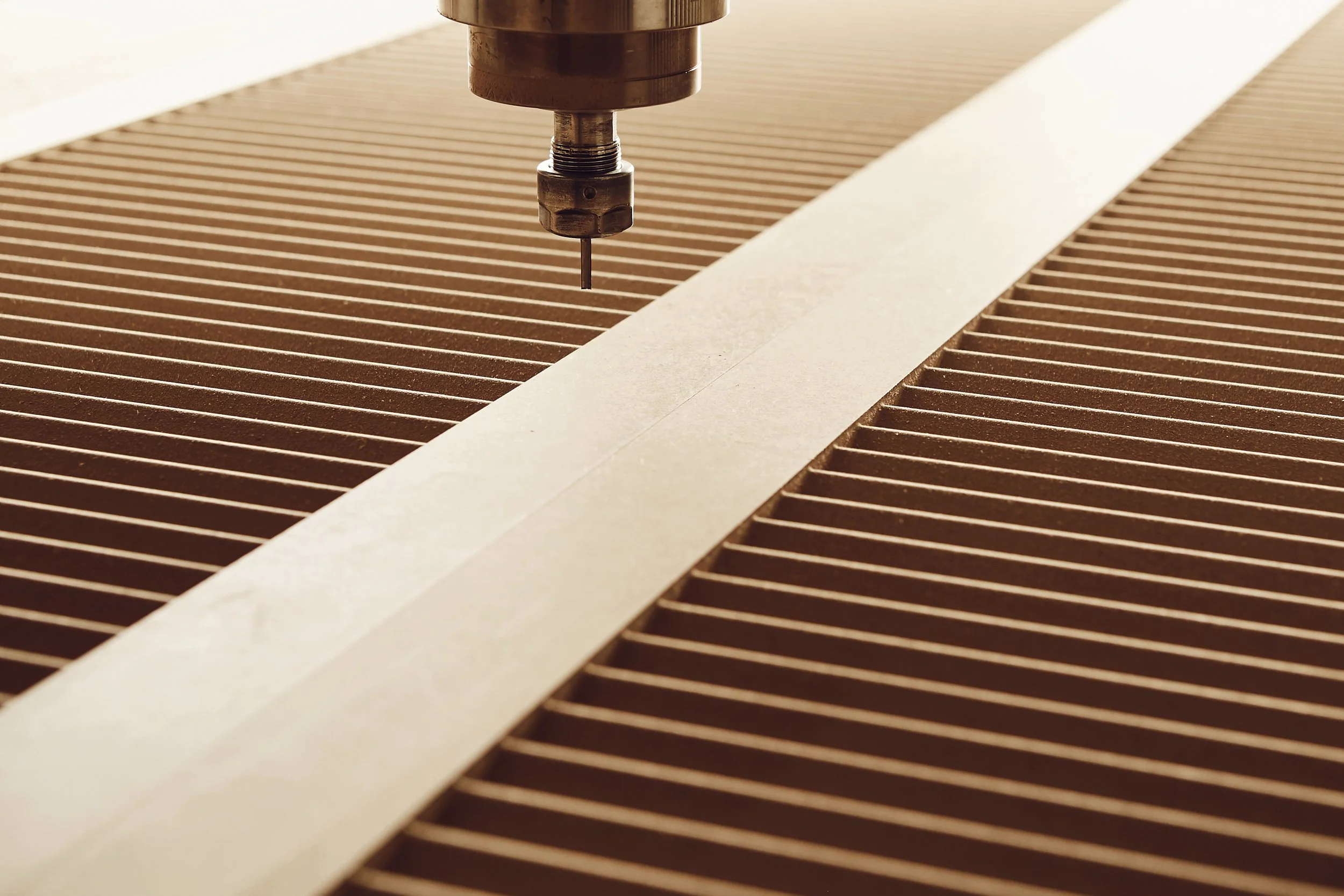
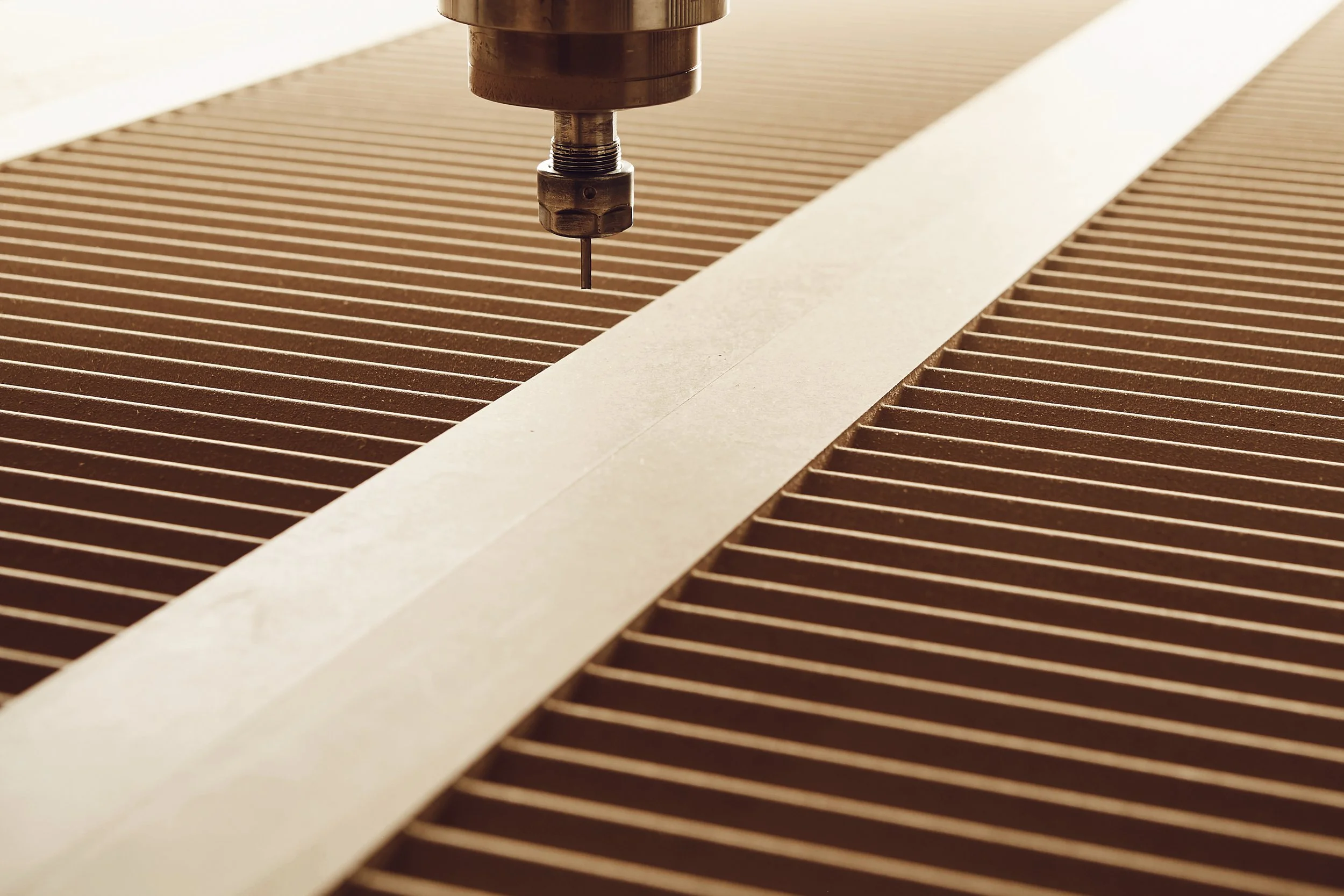
In the case of interlocking parts, a tolerance of +/- 0.1mm will determine whether the parts fit perfectly or if there will be a visible gap. CNC routing can achieve this level of precision by using the right feed rates and toolpath techniques. Manual cutting or low-quality automated cutting methods simply cannot match this precision.
The width of the kerf is also often overlooked in lower-quality cuts. The design file must include the width of the material that the cutting tool will remove. If this is not considered, the parts will not fit together as intended. In large production runs, this small error will be multiplied in every piece produced.
Material Quality Changes How You Cut
Not all acrylics behave the same way under a CNC router or a laser. Lower-grade generic sheet stock can have inconsistencies in density and composition that cause unpredictable chipping on the exit side of the cut, exactly where you don't want visible damage on clear plastic.
Premium cast acrylic, by contrast, responds more predictably to both cutting methods. High-quality perspex in particular has consistent molecular structure across the sheet, which means feed rates, cooling strategies, and tool geometries can be calibrated with confidence. You're not compensating for batch-to-batch variation. That consistency matters more as tolerances tighten.
This is also why residual stress management is taken seriously by professional fabricators. Laser cutting can introduce significant residual stress into acrylic, sometimes requiring annealing at around 80°C to prevent crazing when the part is later exposed to solvents or adhesives. Whether that step is necessary depends partly on the material grade and partly on the cutting parameters used. With premium stock and properly tuned laser settings, you can often avoid it entirely.
What Precision Cutting Saves You in Secondary Work
One reason that cutting corners (pun intended!) on the cutting phase might seem acceptable is that people assume that the subsequent edge polishing will eliminate any negative effects. It's certainly true that edge polishing can mask a lot of sins. It can't fix micro-fractures though, nor restore tensile strength to a heat-damaged edge.
But that's all somewhat academic, because what edge polishing mainly achieves is to drive your costs up. What precision cutting actually facilitates is the minimum necessary secondary work. If the cut is a good one, i.e. the blade geometry is appropriate for the material, swarf is managed so that the sheet is not re-cut, and heat is not building up, and the feed rates are correct for the type of sheet, then the edge coming off the machine is pretty much as good as finished. A quick flame polish or light diamond buff will take it the rest of the way home, removing minimal material and fewest stresses in the process.
Where Precision Cuts Translate to Performance
In a factory, the precision means the difference between the part being properly seated or throwing off the tolerances of every subsequent part that connects to it. It's a passive fit, too; in applications from jigs that hold parts for welding to the screws that hold together your laptop, the birthplace of future tolerances is usually hidden somewhere on the edge of a plastic part.
For medical applications, the tolerance requirements are even tighter and the consequences of failure are obvious.
High-end plastic fabrication isn't defined by the material alone. It's defined by whether the process applied to that material preserves its properties, mechanical, optical, and chemical. Precision cutting is where that process either holds or falls apart.