

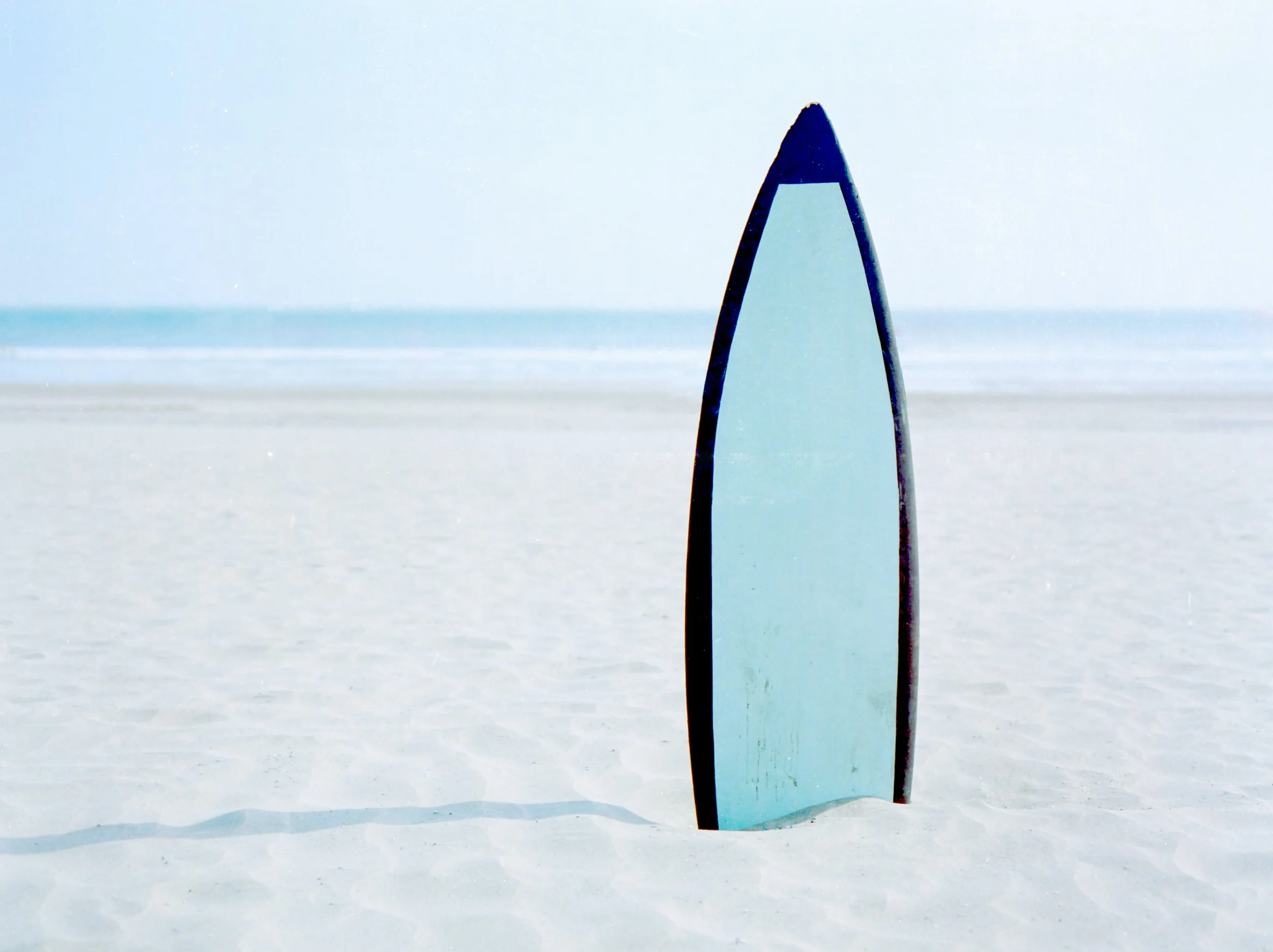
Although waxing a surfboard is not difficult, it is still important to use the proper methods and equipment to get the job done effectively. You've come to the correct spot if you've ever wondered how to properly wax a surfboard. Moreover, if you think you need a professional hand for waxing, you can contact us for the best surfboard waxing service.
First, gather your supplies.
Choose your surf wax carefully since it does not come in one size that fits all. Depending on where you will be surfing and the physical conditions there are several waxes. Your choice of wax for your top coat will depend on the temperature of the water. Use hard wax with a high melting temperature in warm water. You need a softer wax with a lower melting temperature in colder climates. You'll be sliding all over the place if you don't apply the proper surf wax. You'll be OK if you stick to the temperature recommendation on the surf wax packaging.
What you will need:
One bar of tropical water wax or base coat wax.
For the top coat, use one bar of temperature-appropriate wax.
A scraper made of plastic or wax.
A liquid wax dissolving agent (optional).
Clean your board.
Go straight to step three if you're waxing a fresh surfboard.
Give your board's wax some time in the sun—about five minutes. Make long, straight strokes up and down your board until all of the surf wax is gone, then use the thin side of your wax comb or plastic scraper to finish the job. Use a little liquid wax remover to assist get rid of the extra wax if there isn't enough sunlight to melt your old wax.
Apply Your Base Coat.
If feasible, you should put wax inside. When you attempt to apply wax in the sun, it may spread due to the heat created by the friction you produce when waxing. When it comes to waxing a surfboard, there are two schools of thought: the circle approach and the criss-cross method.
Starting to wax in a circular motion might be a little more challenging. However, I believe that waxing in tiny circles produces more even wax lumps. The criss-cross technique is undoubtedly the fastest way to go, which is likely why most tour professionals who use dozens or even hundreds of boards year employ it.
In either case, there isn't really a right or wrong method; it's more of a choice or opinion. So get into a comfortable chair, place your board on your lap, and prepare to put in some elbow grease.
Apply your top coat.
Whatever technique you used to apply your base coat to the board's surface, you should utilize it while applying your top layer of wax: tiny circles. With little pressure and even waxing action, it is easy to get the desired number of tiny bumps. On the top coat, you should apply about twice as much wax as you used on the base layer. Once your board is properly wrapped, you no longer have any excuses for not going surfing. So go outside!
The purpose of waxing a surfboard
Have you ever wondered why a surfboard has to be waxed in the first place, given that you know how to do it? It's easy to see why. Surfboard wax is intended to support surfers' ability to keep their hold on their boards. Without it, it will be difficult for you to balance on your board while standing up, much alone doing any type of tricks. Because of this, correctly applying wax may make the difference between riding and crashing off a wave.
Final thought
Every time you paddle out, you should put some new wax on your feet. Apply just a very thin application to "freshen up" and maintain a solid grip for the first few surfs following a new coat. If you want to expose some new wax for a better grip, though, you may use your wax comb to scrape criss-cross patterns on your board after you've built up a respectable layer of wax. And don't panic if you find yourself at the beach without a comb or a bar of wax. Knee-deep in the water, add a handful of sand to your wet board's wax to give the surface some texture.