
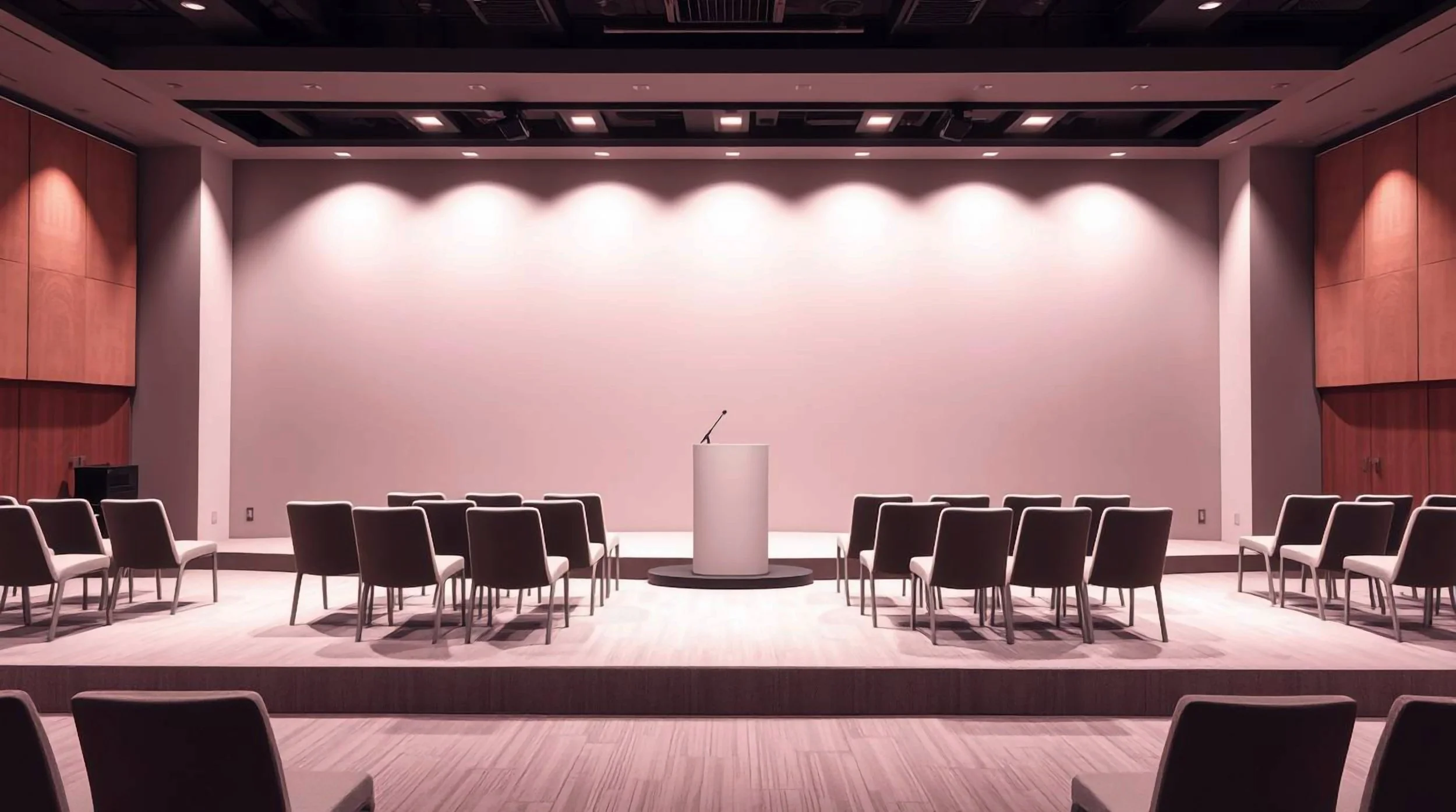
Almost every event planner will be able to tell you about a time when something went wrong, and it wasn't directly their fault, but they were left to pick up the pieces. Issues with the venue are some of the most common causes of event discord, the one thing you wouldn't have thought could go awry. Scratch all your assumptions and drill your potential venue down on these critical areas, everything else is superfluous if these don't work.
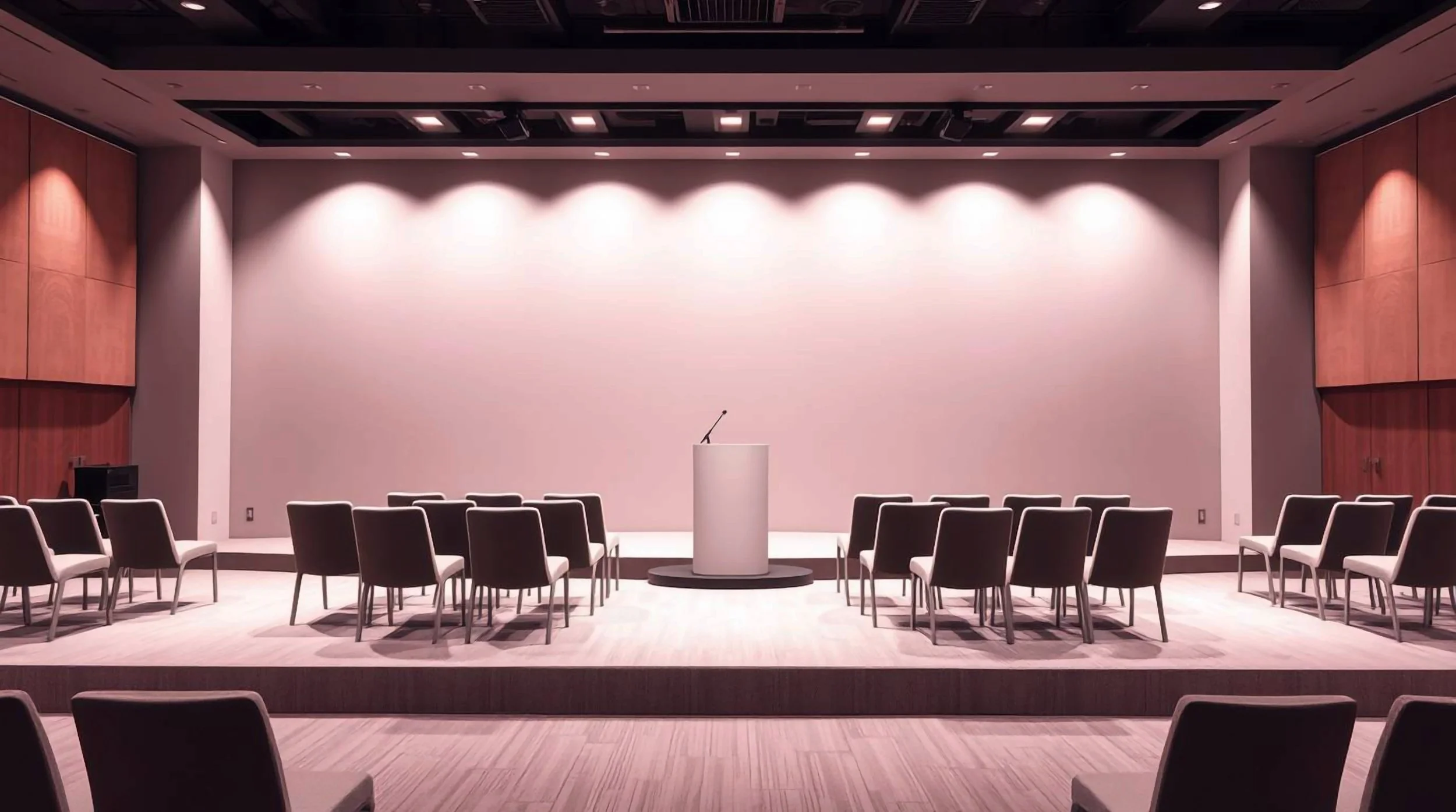
Integrated AV That Doesn't Require a Workaround
The distinction between a "full AV setup" and a truly integrated system is vast. Plug-and-play configurations, where you're given a projector, a lead, and a hope - will suffice for weekly internal catch-ups.
When the stakes are higher and you are launching a product, especially in a sales environment, you'll need a system that has been configured to work seamlessly with the room's dimensions and acoustics, is fixed in place, provides high-definition visuals, and is maintained by on-site support staff.
Microphone, voice-lift, and speaker systems all come under this technical canopy. Any supplied projectors, screens and digital signage almost certainly would too. The quality of the installation's integrity shines through when success is the only option. You need to partner with a firm that designs and installs systems, and not just rents out equipment.
Post-event, tick-box customer satisfaction surveys should form only a part of an ongoing open customer dialogue. If they're not already in the business of managing secure, commercial office networks to deliver global purpose-designed video-equipped meeting and insight suites, then you're using the wrong vendor.
For planners in the southwest, Venue Hire in Bristol at venues like Hen & Chicken combines dedicated performance stages with professional meeting facilities, which means the transition from conference to evening entertainment doesn't require moving everyone to a different postcode.
Connectivity Built For Real Use
Over half of event planners worry the Wi-Fi won't support their event needs, yet the biggest event trend for the coming year is incorporating more technology. Let's unpack that.
Most venues offer the same connection to your event that they offer to every other tenant in the building - fine for ten people checking emails, not fine for 80 people simultaneously running live polling, streaming video, and downloading files. Ask whether the connection can be isolated to your space, what the dedicated speeds are, and whether AV can run on a separate network. If you're getting vague answers, that tells you something.
Flexibility in Room Configuration
A corporate event rarely stays in one format all day. There's usually a formal opening, a series of presentations, smaller working sessions, and then an evening element, whether that's networking, a social hour, or entertainment. A venue that can support all of those phases without requiring a full reset between each one saves time and reduces the friction that kills event momentum.
Look for breakout spaces that are genuinely usable, not just a corridor with chairs. Look for a main room that can shift from theater-style seating to round-table configurations. And if there's an entertainment element planned, check the stage dimensions and whether a lighting rig is available - a performance or live act needs a proper setup, not a cleared corner of the room.
Catering That Works With the Schedule, Not Against It
Continuous access to refreshments without interruptions is a great feature but sometimes, it's not guaranteed. Therefore, you should confirm with the venue whether they can provide a flow-based catering service. Some venues offer fixed service windows which could lead to your attendees being distracted from your keynote, just because coffee arrives or having lunch 45-minutes late. It may not seem like a huge deal, but that's roughly a quarter of your audience headed out the door to the bathroom at some point during your presentation.
If your attendees or team have dietary restrictions or preferences, a kitchen on-site that is used to handling that will save you numerous logistical and food-safety-related conversations. So paying a bit more for in-house catering is totally worth it. When you hire an external caterer, discussions have to happen, and sometimes communication breaks down over which platter is which.
Try to understand how they manage multiple dietary restrictions within your group. This often means the vegetarian/gluten-free person at your table receiving a stack of napkins and a pear. Also, how do they mask the sound of the forklift during someone's toast and keep the clanging kitchen doors from drowning out a panel speaker?
Practical Logistics That Protect Your Vendors
Often, the most critical considerations are the overlooked ones. Load-in and load-out access is the perfect example, countless venues and organizers have had a stress-free preliminary schedule, budget, and set up their perfect tech specs, only to have the experience ruined by a single, seemingly innocuous oversight.
Before you sign anything, confirm whether there's dedicated access for deliveries, what the restrictions are on timing, and whether a service lift is available if your event is above ground floor. Your AV company, caterer, and any production crew will thank you for asking these questions before they're standing in a car park at 7am with nowhere to go.
Location as a Strategic Decision
Being close to transport and lodging isn't just a nice-to-have for your out-of-town colleagues and clients. It will impact the numbers of attendees. The chances of latecomers. And the chances that people will leave early. If people can't easily get there from where they're coming from, they won't come. And if it's easy for them to leave halfway through to catch the last train, some will.
A venue is difficult to access when it's not a short hop from a major airport, bus, or train station. Or when it doesn't have enough quality hotel rooms nearby. If either of these is the case, their inconvenience levels will make your event that much harder.